


Getting More from IDeaS RMS: Tips and Tricks
Updated: Apr 2
Most hotels using IDeaS RMS are only scratching the surface. Here's what we review — and fix — to make it a genuine commercial advantage.

IDeaS RMS is one of the most common revenue management systems we work with — and when it's configured correctly, it's a genuine game changer. Revstar works with a lot of hotels running IDeaS, and in our experience, most of them aren't maximising it to its full potential.
The system is capable of far more than most hotels realise. But without the right configuration, proper training, and regular review, you can find yourself only scratching the surface of what it can do.
Here are six areas that consistently make a real difference:
Room class mapping
If room classes aren't correctly mapped to the room types within Lighthouse, pricing on those classes can be significantly impacted. It's one of the first things we review when working with a hotel on their IDeaS setup — and the fix is often simpler than expected.
Floor and ceiling rates
These are not a set-and-forget. Default floors and ceilings benefit from regular review, and seasonal floors and ceilings should reflect what's actually happening in your market. Outdated rate floors can quietly cap or distort your revenue potential without anyone noticing.
Special events
Load your special event alongside a seasonal floor and ceiling. In our experience, the two work hand in hand — one without the other can leave your pricing response incomplete. It's a pairing that's easy to overlook and costly to miss.
Market segment forecast type
Every segment benefits from having the right forecast type applied — demand and wash, wash only, or none at all. This single setting can have a significant impact on forecast accuracy, and it flows through to every pricing decision the system makes.

Group pricing configuration
Two areas we always review here: servicing costs, which affect how group profit is calculated, and whether an automatic percentage off BAR is activated for base group business. Without that second setting, group pricing can push higher than intended.
Change and pick up report
An underutilised feature we always recommend setting up as a scheduled daily report. Running it alongside your pickup report gives you a helpful daily check that sell rates are tracking as expected — a small habit that catches big problems early.
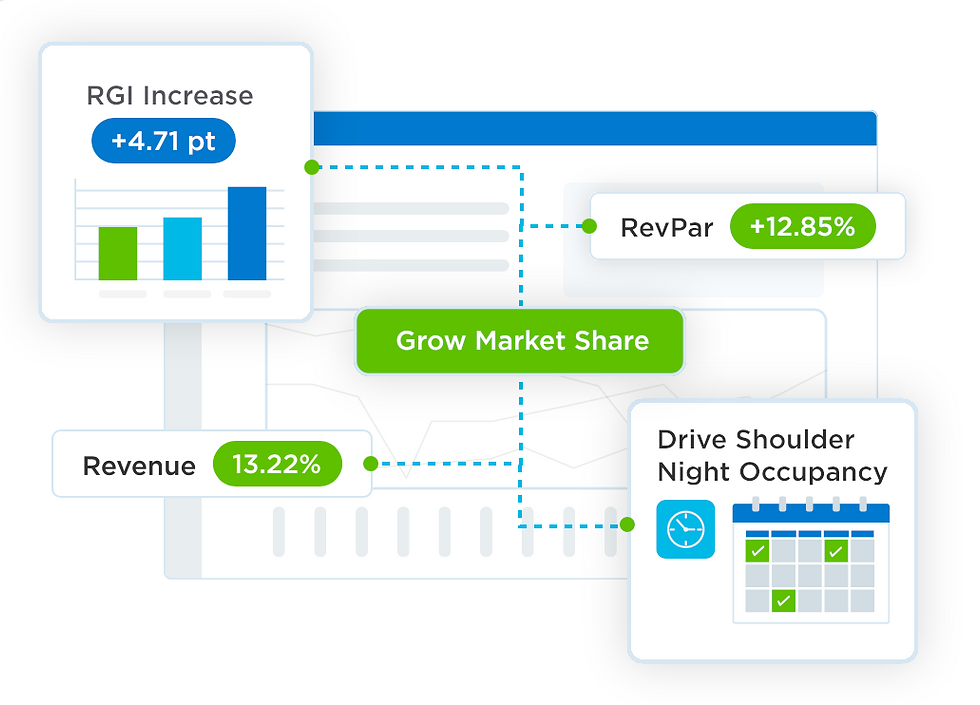
A great RMS is a genuine commercial advantage. But it needs to be configured correctly, trained on thoroughly, and reviewed regularly to deliver on that promise. If you're unsure whether your IDeaS setup is working as hard as it should be, we're happy to take a look.
Want an IDeaS health check?
We review your configuration, flag what's not working, and help you unlock what the system is really capable of.


Comments